Get Quote
Geophysical Method

Magneto-
tellurics (MT)

Deep Resistivity  ·  Crustal Imaging  ·  Mineral Systems  ·  Natural EM Fields

Magnetotellurics
(MT)

Magnetotellurics (MT) is a passive geophysical method that uses natural variations in the Earth’s electromagnetic field — caused by solar wind and lightning — to image subsurface electrical resistivity from hundreds of metres to tens of kilometres depth.

Simultaneous measurements of orthogonal electric (E) and magnetic (H) field components at the surface allow calculation of the impedance tensor, which is inverted to produce 2D or 3D resistivity models of the crust.

MT is the premier tool for deep mineral system imaging, crustal architecture, and basin evaluation — critical for targeting blind deposits in Tasmania’s prospective terrains such as the Mount Read Volcanics.
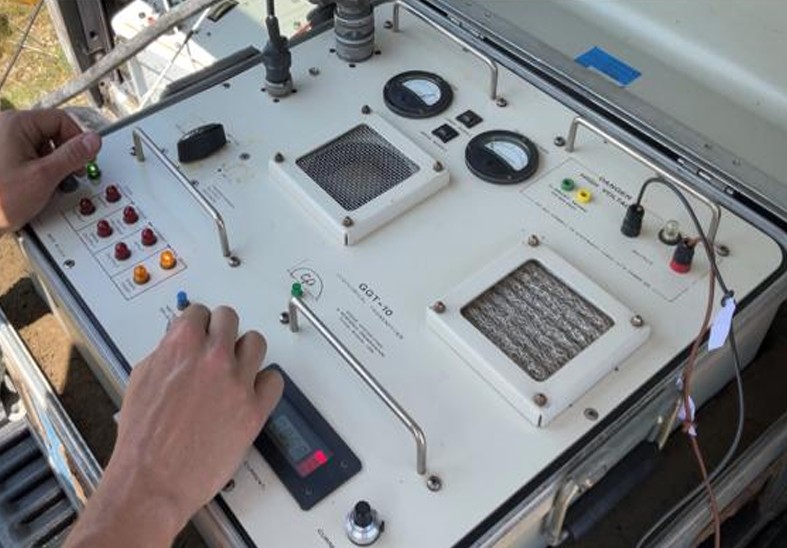
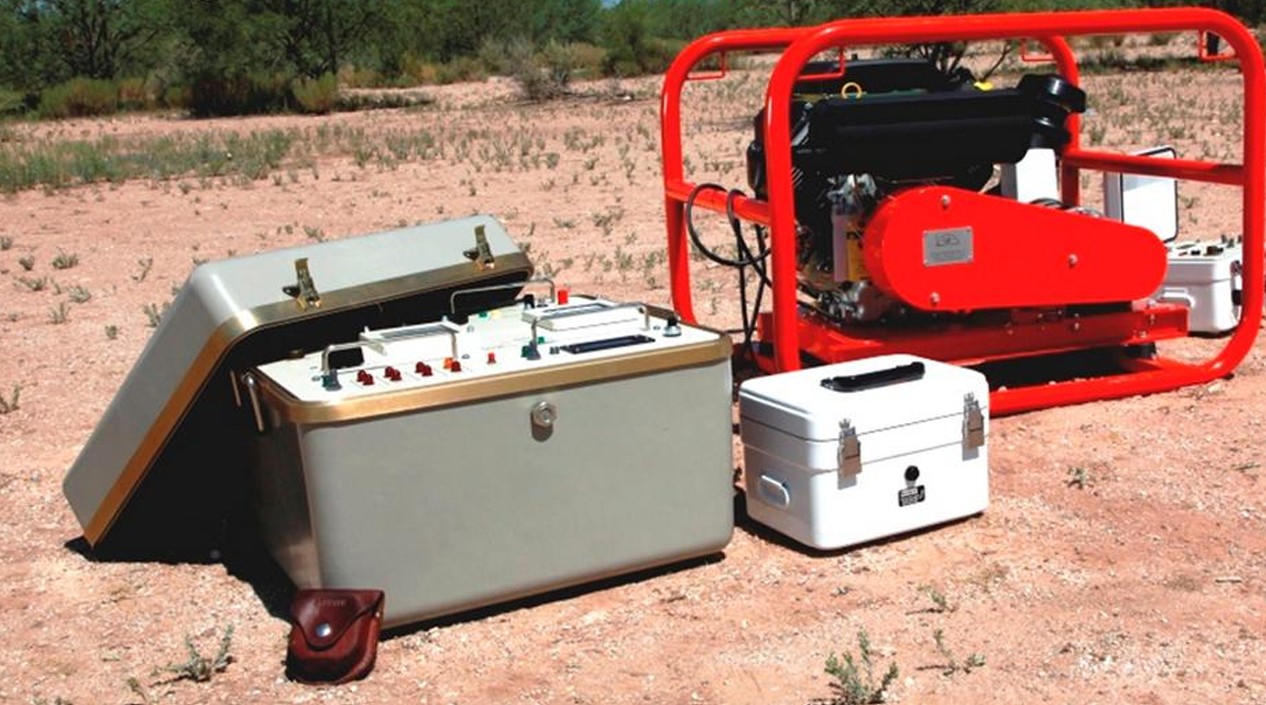
Magnetotellurics survey equipment
    Mineralisation & Alteration
    Disseminated and massive sulfides, graphite, and hydrothermal alteration dramatically lower resistivity
    Lithology & Fluids
    Porous sedimentary basins, saline fluids, and partial melts contrast with resistive crystalline basement
    Crustal Structures
    Faults, shear zones and sutures often appear as conductive pathways
    Temperature & Depth
    Increasing temperature and pressure influence conductivity at crustal scales
MT equipment Tasmania

CSAMT equipment and generator for controlled source

Data Processing & Inversion

Unlike passive Magnetotellurics which relies on natural electromagnetic fields, CSAMT uses a powerful controlled transmitter as the signal source. This provides much stronger and more consistent signals, resulting in higher data quality, faster acquisition, and better resolution at target depths. The recorded time-series data are processed into the frequency domain and inverted using robust 2D and 3D algorithms to produce detailed resistivity models of mineral systems and geological structures.

MT System
Operation

MT stations record natural EM field variations over long periods (hours to days) using non-polarising electrodes and induction-coil or fluxgate magnetometers. Broadband MT covers frequencies from ~10,000 Hz (shallow) to 0.0001 Hz (deep crustal).
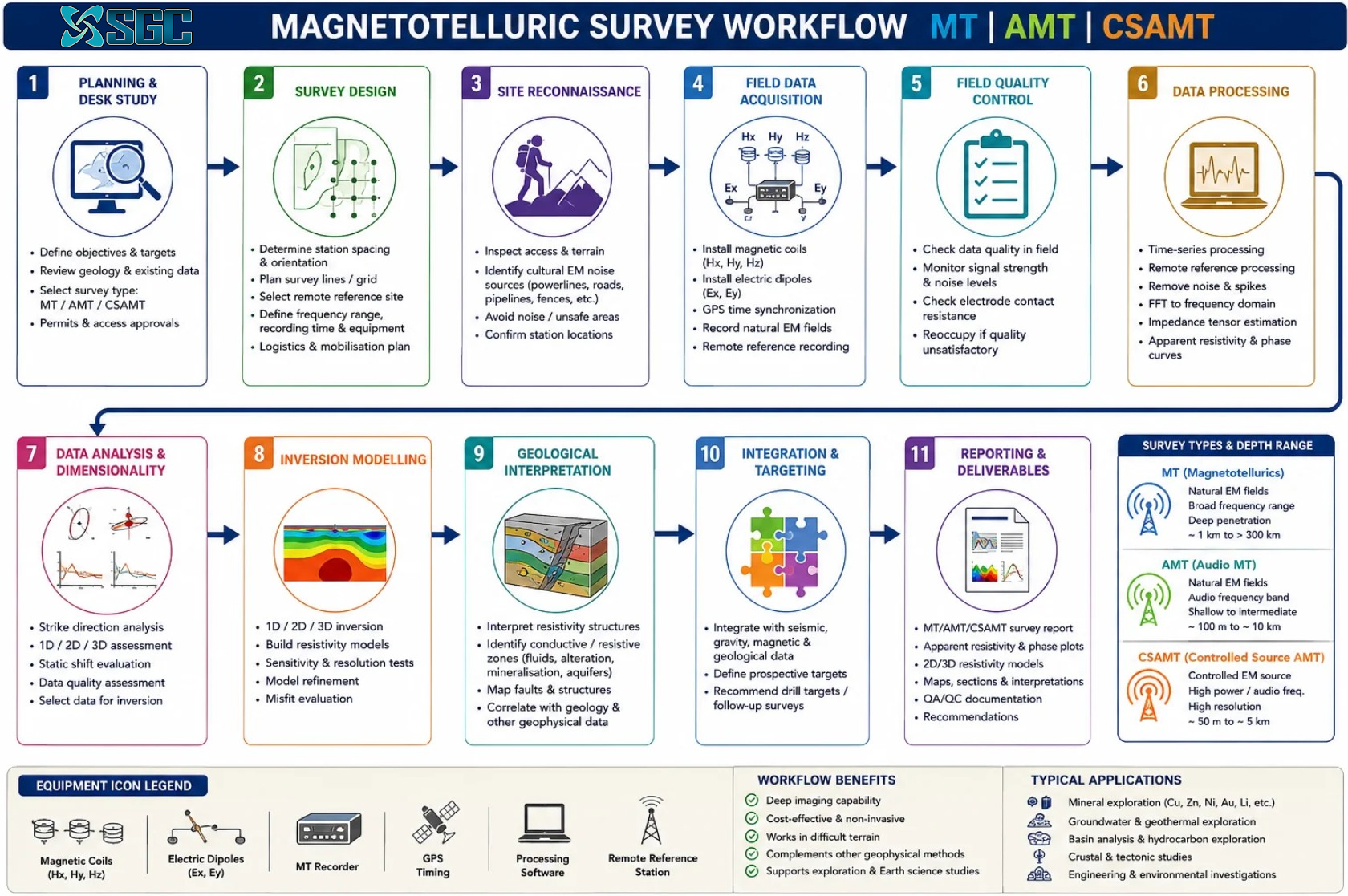
    Depth of Investigation
    Hundreds of metres to thousands of km — ideal for deep mineral systems and basin architecture
    Passive Method
    No artificial power source required — excellent for remote or culturally noisy areas
    AMT / CSAMT
    Audio-frequency MT for shallower targets; Controlled source MT for deep crustal imaging
    Tasmanian Applications
    Identifying economic resource drill targets and deep mineral pathways

Where MT
Is Applied

Mineral Exploration
Deep imaging of conductive sulfides, alteration zones, and mineral systems.
Explore
Basin & Groundwater
Sedimentary basin architecture and deep aquifer delineation.
Explore
Deep Targeting
Blind deposits and under-cover exploration in Tasmania.
Learn More

Areas We
Serve in Tasmania

Spaulding Geophysics provides geophysical services and concrete NDT across Tasmania, from Hobart and Launceston to regional centres, coastal towns, and remote communities statewide.

South & Greater Hobart
  • Hobart
  • Kingston
  • Margate
  • Kettering
  • Bruny Island
  • New Norfolk
  • Sorell
  • Dodges Ferry
North & Launceston
  • Launceston
  • George Town
  • Longford
  • Perth
  • Hadspen
  • Westbury
  • Deloraine
  • Bridport
Northwest Coast
  • Devonport
  • Burnie
  • Ulverstone
  • Wynyard
  • Penguin
  • Smithton
  • Latrobe
  • Port Sorell
East Coast & Midlands
  • Bicheno
  • St Helens
  • Scottsdale
  • Swansea
  • Campbell Town
  • Ross
  • Queenstown
  • Huonville

Spaulding Geophysics delivers comprehensive geophysical services and concrete NDT across all of Tasmania — including Hobart, Launceston, Devonport, Burnie, Ulverstone, George Town, Longford, Deloraine, Smithton, Wynyard, Bicheno, St Helens, Scottsdale, Queenstown, Huonville, Kingston, Kettering, Bruny Island and surrounding communities. Remote and regional sites welcomed.