Frequency-Domain
Electromagnetics
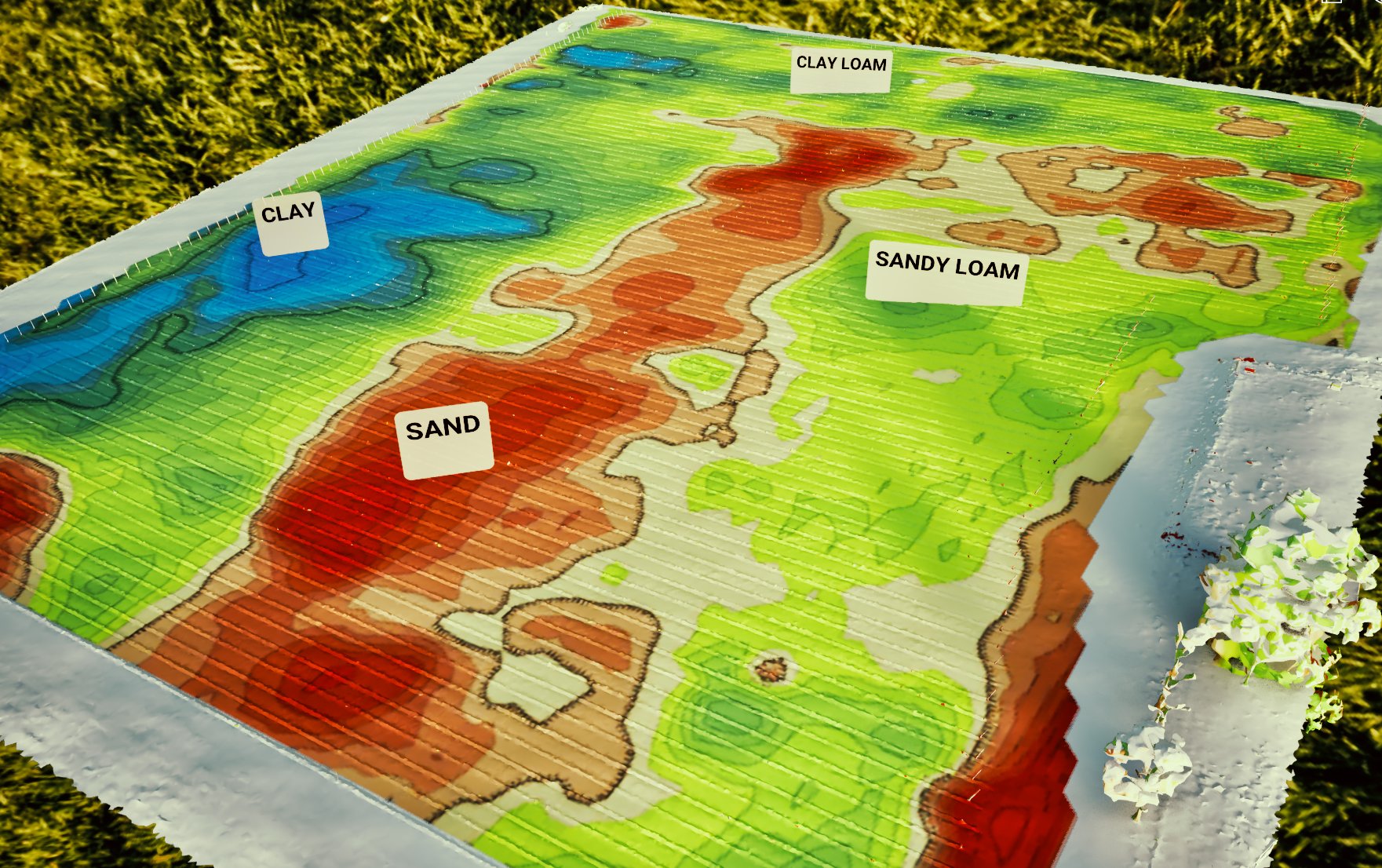
Electromagnetic Induction (EM) terrain mapping is a non-invasive geophysical method to image the subsurface at designated depths using ground conductivity and magnetic susceptibility measurements.
A transmitter coil Tx energised by alternating current generates a time-varying primary magnetic field (Hp). This induces eddy currents in the earth generating a secondary magnetic field (Hs). The ratio Hs/Hp is linearly proportional to terrain bulk electrical conductivity (ECa).
ECa is the reconnaissance method of choice — it provides rapid large-area conductivity maps that guide all subsequent targeted investigations.
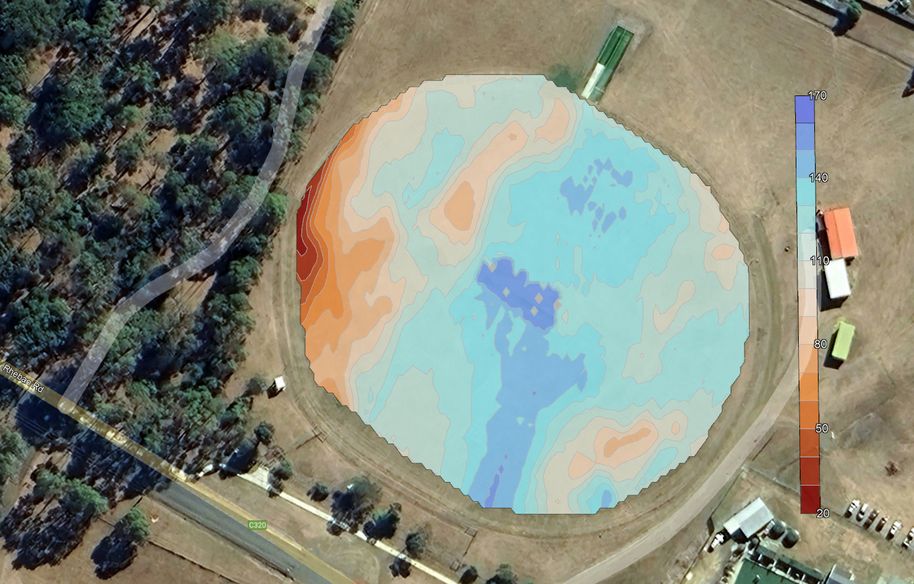
ECa apparent conductivity (mS/m) highlighting drainage patterning and soil profile variance.
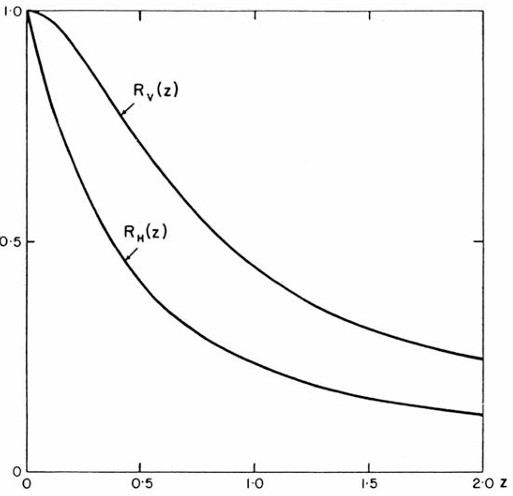
Cumulative response curves
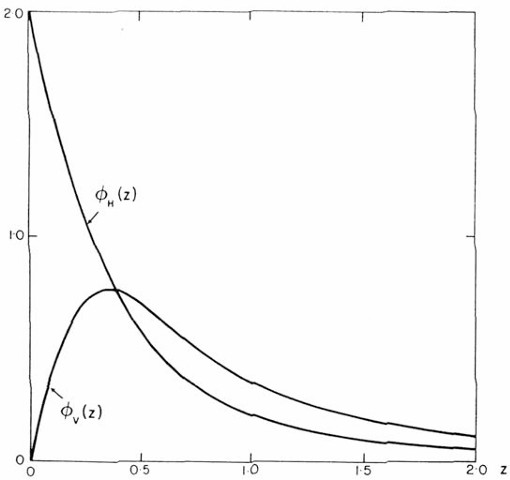
Instrument response relativce to coil seperation
Geonics EM38 — 14.6 kHz, 1 m coil separation, GPS-integrated for real-time georeferenced ECa acquisition
EMI Device
Operation
Multi-coil configurations in vertical and horizontal dipole modes provide multiple depth windows from a single pass. GPS-integrated for real-time georeferenced ECa acquisition.
ECa is the cumulative sum of all layers multiplied by their respective conductivities. A reading of 100 mS/m could represent two 100 mS/m layers or an upper 80 mS/m layer with a 160 mS/m lower layer. The forward model minimises misfit between observed and predicted values to resolve the depth profile.
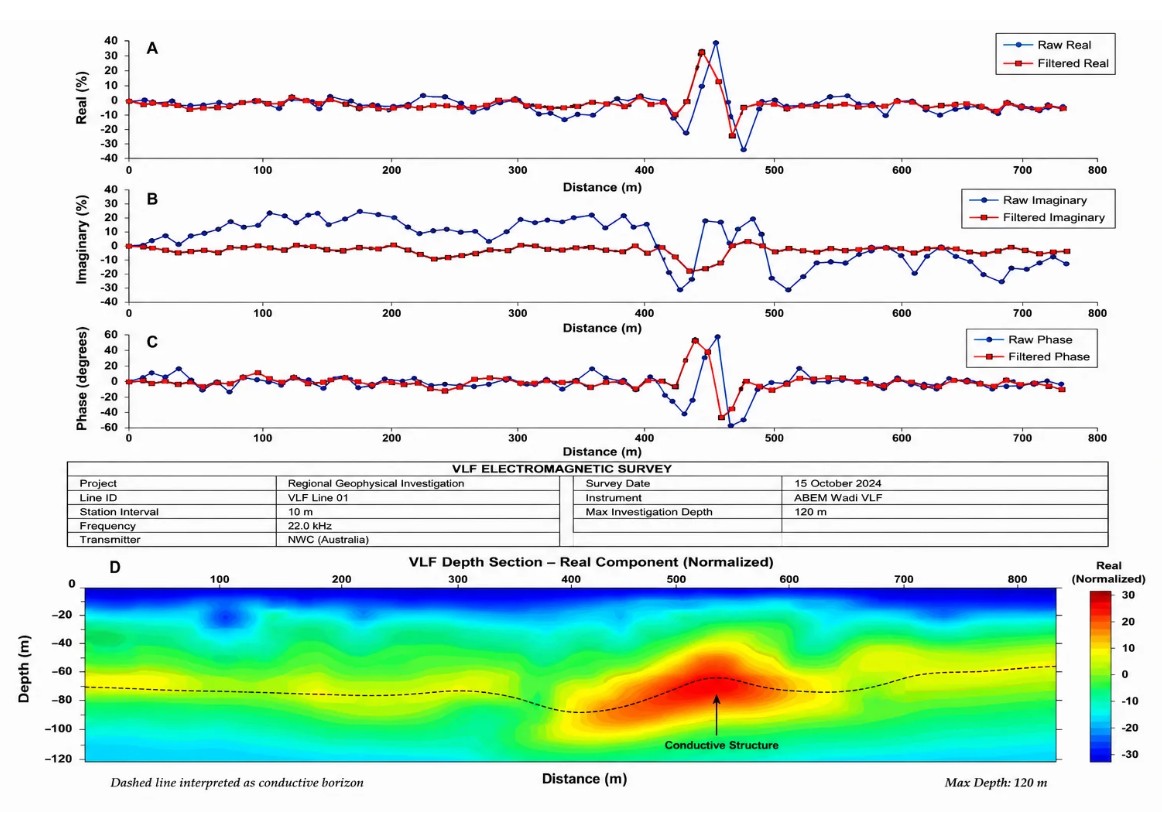
Very Low Frequency Electromagnetic (VLF-EM) surveying is a rapid, non-invasive geophysical technique used to identify electrically conductive subsurface features
VLF-EM
Operation
The Very Low Frequency Electromagnetic (VLF-EM) method is a rapid and non-invasive geophysical technique used to identify subsurface structures such as such faults, fractures, shear zones, sulphide mineralisation, groundwater-bearing structures and abandoned mine workings.
This method uses naturally available radio signals transmitted by VLF radio stations worldwide and measures the electrical conductivity of trapped fluids and weathered materials, this rapid method delivers fast, accurate mapping of underground structures.
| Material | Resistivity (Ρ) | Depth |
|---|---|---|
| Granite | >5000 Ω m | >300 m |
| Clay | 1- 100 Ω m | 15 – 40 m |
| Moraine | 100 - 2000 Ω m | 40–200 m |
| Tap Water | 20 - 200 Ω m | 30 - 60 m |
| Salt Water | >1 - 10 Ω m | 4 - 15 m |
Transient
Electromagnetics (TDEM)
Transient (or Time-Domain) Electromagnetics is a powerful geophysical method that transmits a strong pulsed current through a large loop and measures the decaying secondary magnetic field after the current is turned off. This provides excellent depth penetration and is highly effective for detecting conductive targets.
TDEM is particularly suited for mineral exploration because it responds strongly to massive and disseminated sulfides, making it ideal for targeting VMS deposits common in Tasmania’s Mount Read Volcanics and other conductive mineral systems.
TDEM offers superior depth resolution compared to FDEM and is the preferred method for delineating deep conductive bodies such as massive sulfides and deep groundwater conductors.
TDEM
Operation
A large transmitter loop generates a strong current that is abruptly turned off. The receiver then measures the decaying secondary magnetic field over time. Early-time data provides shallow information; late-time data reveals deeper conductors.